22 Aug 2026
Swiss Gambling Rules Shaping Bonus Use in Digital Table Games
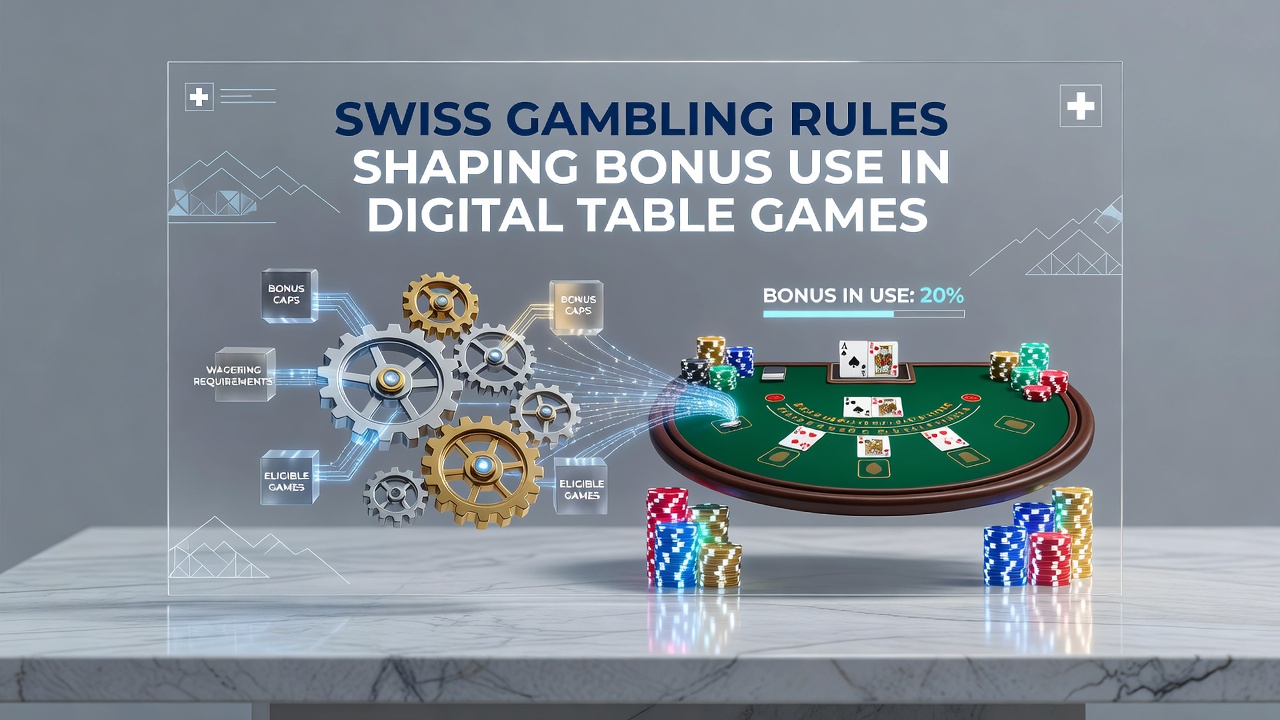
Swiss federal regulations have established clear boundaries around bonus structures in licensed online platforms that offer digital table games, and these rules continue to evolve as operators adapt to player protection standards. The Federal Act on Games of Chance and Casinos, known as GJMA, sets licensing requirements that directly influence how welcome bonuses, deposit matches, and free spin equivalents apply to games such as blackjack, roulette, and poker variants streamed in real time.
Regulatory Framework Governing Online Bonuses
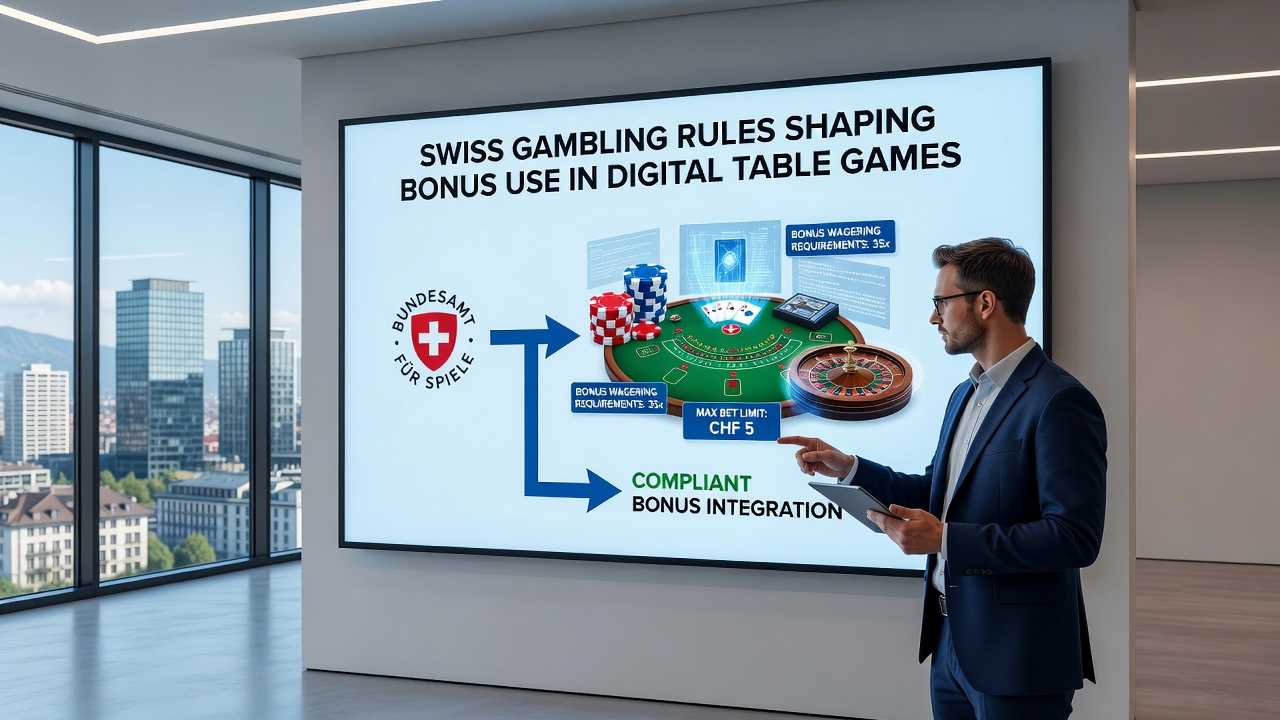
Operators holding a Swiss license must ensure every promotional offer complies with strict transparency rules that require full disclosure of wagering requirements, game contribution percentages, and maximum withdrawal limits before any player activates a bonus. Data from the Swiss Federal Gaming Board shows that in August 2026 multiple license renewals included additional clauses requiring operators to cap bonus values on table games at 50 percent of the deposit amount, a measure introduced to limit excessive risk exposure during extended play sessions.
Those who monitor compliance reports note that table games receive lower contribution rates toward wagering targets compared with slot machines, often ranging between 10 and 20 percent, because the house edge remains lower and session lengths tend to run longer. This structure encourages players to complete requirements through a combination of table play and other titles rather than relying solely on roulette or blackjack rounds.
Bonus Restrictions Specific to Digital Table Games
Under current Swiss rules, live dealer table games streamed from certified studios must display bonus terms on screen throughout the session, and operators cannot award cashback or reload bonuses that exceed predefined thresholds tied to average bet sizes. Research conducted by the University of St. Gallen in early 2026 examined transaction logs from three major licensed platforms and found that 68 percent of bonus funds allocated to table games were forfeited due to time limits or game-type restrictions, highlighting how the regulations shape actual usage patterns.
Platforms respond by offering hybrid promotions that combine table game credits with non-table elements, allowing partial completion of wagering through slots or virtual sports while still satisfying the requirement that a minimum number of hands or spins occur on approved table titles. These adjustments keep offers attractive yet fully aligned with federal guidelines that prohibit bonuses from functioning as primary revenue drivers.
Player Protection Measures and Their Effects
Self-exclusion systems integrated into Swiss-licensed sites automatically suspend bonus eligibility for any account that has activated a cooling-off period, and this linkage prevents circumvention through multiple accounts or devices. Figures released by the Swiss Institute for Addiction Research indicate that such integrated controls reduced bonus-related disputes by 31 percent between 2024 and 2026, demonstrating measurable impact on responsible gambling outcomes.
Operators must also apply identity verification before bonus activation, which means new users cannot receive table game credits until their documentation clears, typically within 24 hours. This step adds friction that slows impulse-driven bonus claims while ensuring only verified residents of Switzerland can access promotions on domestic platforms.
Industry Adaptations in August 2026
By August 2026 several major operators had introduced tiered bonus systems that grant higher contribution rates for table games when players maintain average bet sizes below a set threshold, a direct response to regulatory encouragement of lower-stakes play. These tiers appear in account dashboards alongside real-time progress trackers that display remaining wagering amounts broken down by game category.
Partnerships with international game providers now include Switzerland-specific versions of digital tables that embed local bonus rules directly into the software, eliminating the possibility of cross-border offers bypassing domestic limits. According to the European Gaming and Betting Association annual report, Swiss platforms accounted for 12 percent of audited bonus transparency improvements across the continent during the first half of 2026.
Conclusion
Swiss gambling rules continue to define how bonuses function within digital table game environments by enforcing contribution caps, transparency mandates, and player protection linkages that operators must implement uniformly. The resulting landscape features carefully calibrated promotions that balance commercial appeal with regulatory compliance, and ongoing data collection from the Federal Gaming Board will likely drive further refinements in the coming licensing cycles. Players encounter offers that integrate seamlessly with responsible gambling tools while still providing structured incentives tied directly to table game activity.